
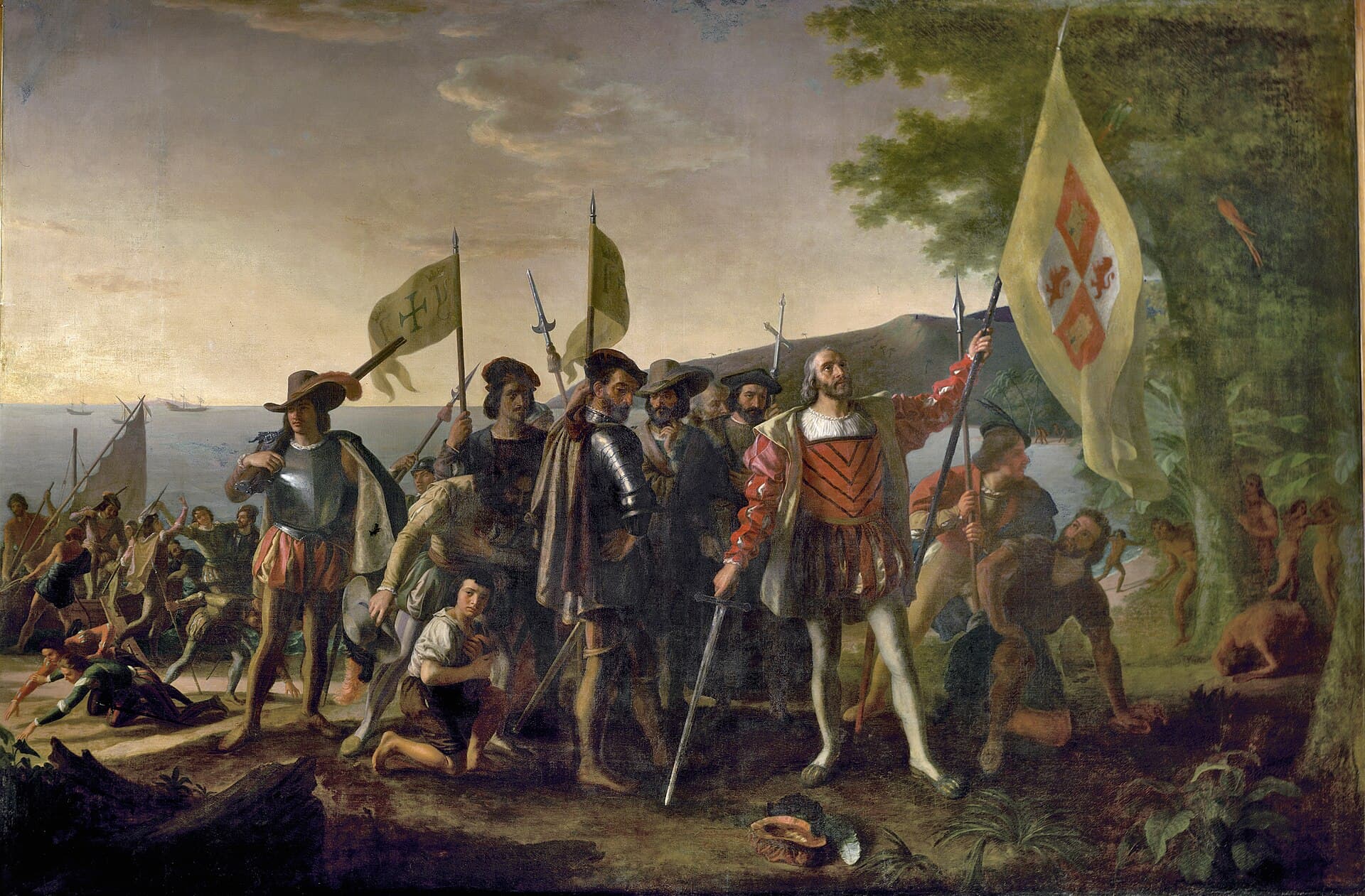
The Columbus Legacy Foundation is dedicated to the preservation and dissemination of the historic record surrounding Christopher Columbus, the Age of Exploration, and the civilization-changing encounter between the Old and New Worlds.
Modern portrayals of Columbus frequently rely upon selective quotation, anachronistic moral frameworks, repetition of unsupported claims, and the attribution of atrocities committed by later colonial systems to Columbus himself. Yet few individuals — including many students, educators, and commentators — have read the primary source material from Columbus’s own lifetime, or the accounts of those who knew him personally.
The voices of his own lifetime
The Foundation exists to make these sources more accessible and to encourage direct engagement with the historical record. Our work includes the collection, translation, publication, and analysis of contemporary accounts written by figures such as:
- Christopher Columbus himself — letters, logs, and memorials
- Bartolomé de las Casas — friar, historian, and editor of the first voyage’s journal
- Ferdinand Columbus — the Admiral’s son and biographer
- Diego Álvarez Chanca — physician of the second voyage
- Gonzalo Fernández de Oviedo — royal chronicler of the Indies
- Peter Martyr d’Anghiera — humanist chronicler at the Spanish court
- Andrés Bernáldez — priest, chronicler, and host of Columbus
- Other eyewitnesses and early chroniclers of the voyages and settlement period
The context modern discussions leave out
We also seek to provide historical context often absent from modern discussions, including:
- Late-medieval Christian Europe and its worldview
- The Ottoman disruption of eastern trade routes
- Atlantic exploration prior to 1492
- The political structure of Castile and Aragón
- The encomienda system
- Intertribal warfare in the Caribbean
- Accusations of cannibalism among the Caribs
- The administrative conflict between Columbus and rival Spanish factions in Hispaniola
Evidence over ideology
History must be studied through documentary evidence rather than ideology, political fashion, or cultural mythmaking.
This conviction requires rejecting both uncritical hero worship and sensationalized demonization. It demands the careful evaluation of primary sources, corroborating testimony, and historical context, with a clear distinction between eyewitness evidence, hearsay, and later tradition.
Our goal is not to demand admiration for Columbus, but to ensure that conclusions about his life are grounded in authentic historical methodology:
- Primary source analysis
- Corroboration of testimony
- Contextual interpretation
- Careful distinction between eyewitness evidence, hearsay, and later legend
Our conviction
While readers must ultimately draw their own conclusions, we believe the primary sources present Columbus as a man worthy of respect rather than condemnation. Through educational outreach, publications, curriculum resources, lectures, and public access to historical documents, the Columbus Legacy Foundation seeks to encourage thoughtful inquiry into the life of one of history’s most consequential — and, we believe, most misunderstood — figures.